
I really dislike 10% off website pop-ups, and I think small businesses should stop using them, so this is a long-overdue blog post to show you why.
Work out why for yourself on the calculator below.
This Advice Is for Small Businesses
Good advice is relative. Great advice for one business can be bad advice for another. While advice is often given with the best intentions, it can fall flat due to the many interconnected variables at play. For example, the size of the business or the timing of the advice. What worked five years ago won’t necessarily work now. That’s why great advice should always be given with the context in which it has been learned from or seen working.
Unlike large companies, small businesses don’t have the resources, budget, or safety net to absorb mistakes. I wrote this to highlight the importance of questioning the so-called ‘best practices’ out there. Big businesses can afford not to question preconceived ideas because they’re large enough that if they make a mistake they’ll still likely survive.
Like when eBay reportedly spent millions bidding on its own branded search terms, only to find that for every dollar spent, it was actually losing approximately 63 cents. In large companies, the person making the decision is often not directly affected by the consequences. Even if the company is negatively affected, the effects won’t be seen immediately, and the person can just move to another employer.
Small businesses don’t have this luxury. We must be so careful with what we do because the stakes are so much higher.
Why We Don’t Buy Into the 10% Off Pop-Up Logic
Lifetime value
A key reason for the 10% discount is that it increases the lifetime value of a customer by growing your email list. For this to be true, you should actively be using your email list. If you’re like most small businesses and only send occasional emails, this logic doesn’t apply.
They’re Showing Up Too Early
Google “10% off popups“, and you’ll be told they increase the conversion rate of websites.
While this may be true in some cases, for the purposes of this blog, we looked at 100 websites across five countries and found that 86% of sites with a pop-up appeared within the first three seconds.
The absurdity of the conversion logic is apparent when you consider that for the for the statement that 10% off popups increase conversion rates we have to believe that there is a scenario in which a user visiting a site would be able to view a potential product, consider purchasing it and then get influenced to buy because of an intrusive 10% off popup all within three seconds.
There may be a scenario where conversion rates increase only if a pop-up is shown after 2 minutes or longer. But then this is an entirely different statement. This is why specificity and context are so important.
The Hidden Cost of Discounts for Small Businesses
Pricing is one of the most powerful levers in your marketing strategy. Big brands have entire teams of pricing specialists with PhDs and sophisticated models. Small businesses? Not so much. Deciding whether to run a 10%-off pop-up is usually not a major strategic decision. It’s something that’s often done because others are doing it. What this often means is that brands don’t fully understand the implications of these discounts for profits.
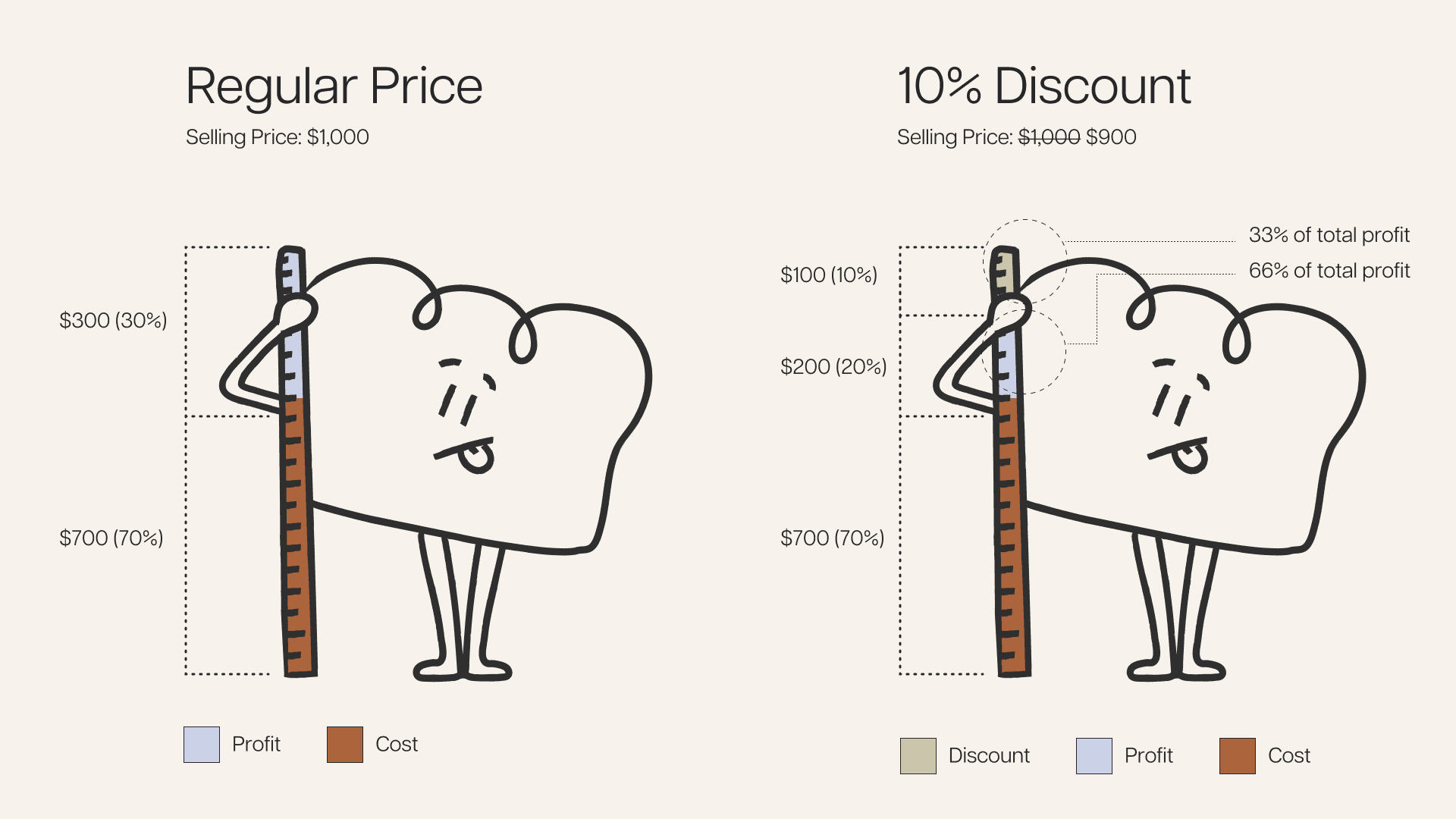
10% discount doesn’t simply reduce profit by 10%. The cost to sell your product stays the same.
A brand with a 30% margin offering a 10% discount would see its margin drop to 20%.
To maintain the same profit, sales would need to increase by 50%, which may not be feasible.
That’s not just more work. It assumes the extra demand exists, which often it doesn’t.
Profit Calculator
Try putting in your own values to see how much profit your discount is costing you.
“Required sales increase” shows how much extra you need to sell at the discounted price to make the same total profit as you would have before the discount.
Discounting Is, in General, a Bad Decision
An article on discounting wouldn’t be complete without giving credit to Mark Ritson, who has for decades been banging the drum, cautioning brands from being overreliant on discounts.
While discounts can boost short-term sales, they rarely change consumer behaviour permanently. There are certainly many use cases for price promotions, but they should be backed by a specific strategic rationale. What brands often find is that discounting can be incredibly addictive because of its immediate effects.
While discounts can boost short-term sales, they rarely change consumer behaviour permanently. There are many reasons to use price promotions, but they require a solid strategy. Many brands discover that discounting can be highly addictive due to its quick results.
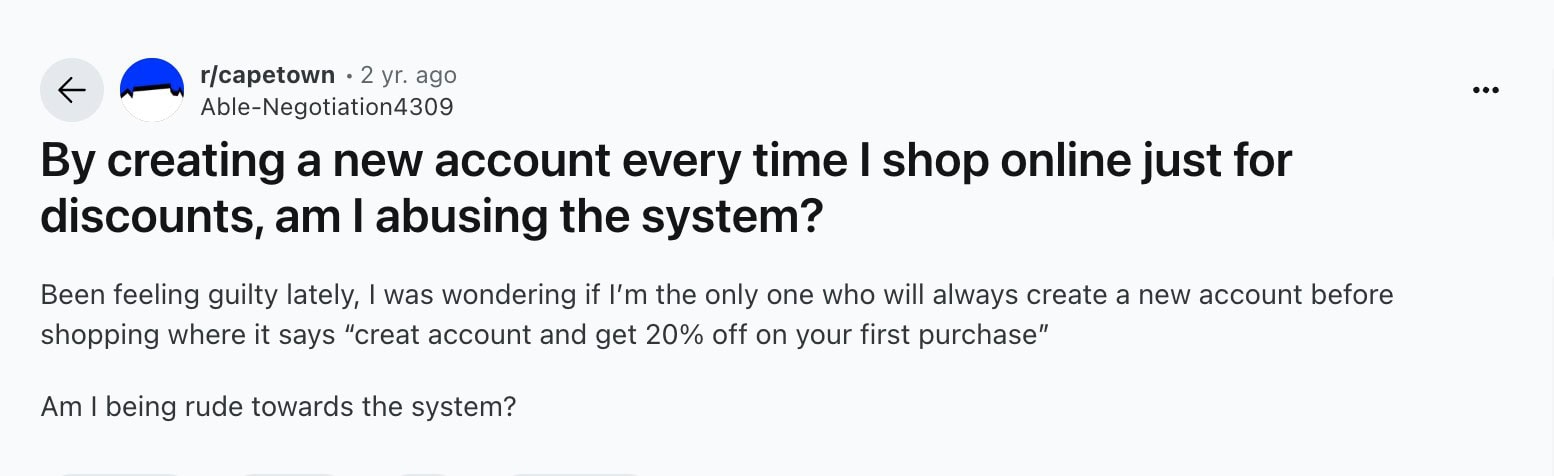
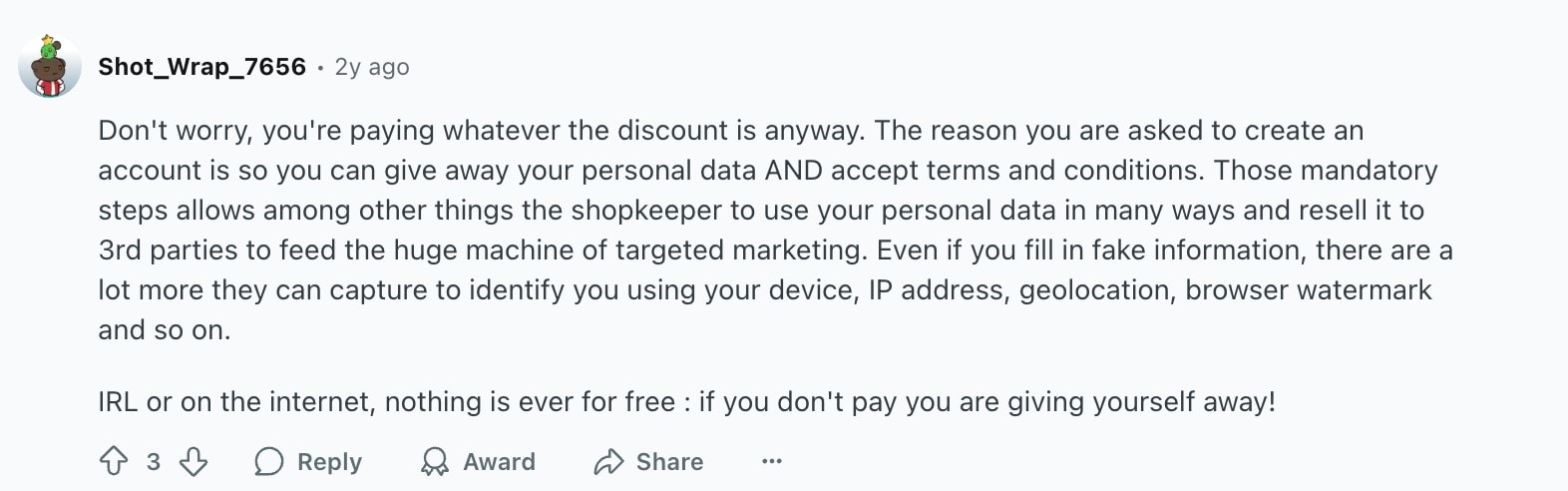
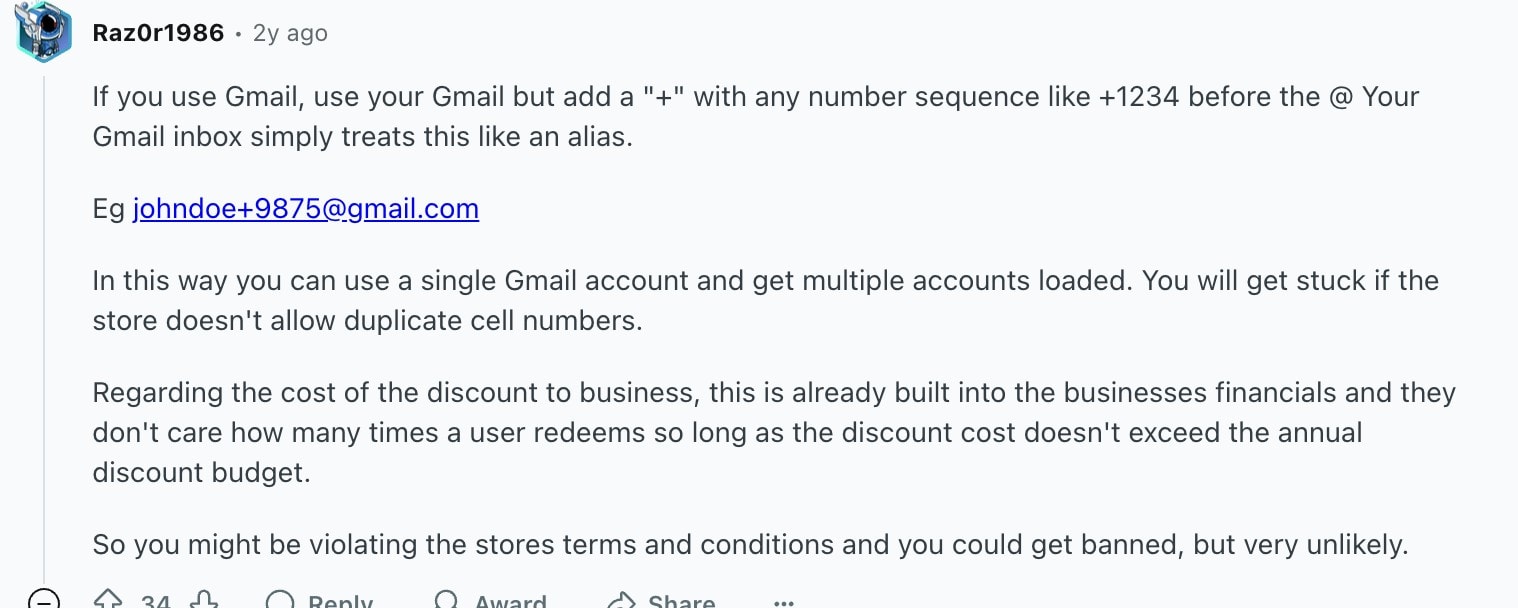
The simplest argument against an initial 10% discount is that you can communicate only a few messages well at any one time. Starting your relationship with a customer by offering a discount signals you don’t believe in the value of your product. While the marketing team may have a strategic rationale for the discount, the customer has an entirely different perspective. While anecdotal, here’s a Reddit thread that supports this theory:
Popups Are a UX Nightmare
Popups break virtually every rule of good UX:
- They interrupt the user’s flow before the user has had a chance to engage with the content.
- Increasing cognitive load often causes frustration or task abandonment.
- They remove user control and autonomy, forcing action or dismissal rather than letting the user decide.
For the most part, pop-ups can never really be a good UX, and we need to be more upfront about this rather than trying to force bizarre justifications for their use. While I’m open to the idea that there is a use case where they could work, I don’t believe a 10% off code is one of them.
Who Really Benefits from Your 10% Pop-up?
It’s fascinating to think about how prevalent these 10% pop-ups are despite the clear UX issues and very lacking business case for them. A 10% off pop-up is often recommended by parties who have a vested interest in proving it “works,” but with no real interest in whether it “works” for the business’s bottom line.
The top 4 pages that show up for the search, “Do popups increase conversion” are all software companies that sell popup tools.
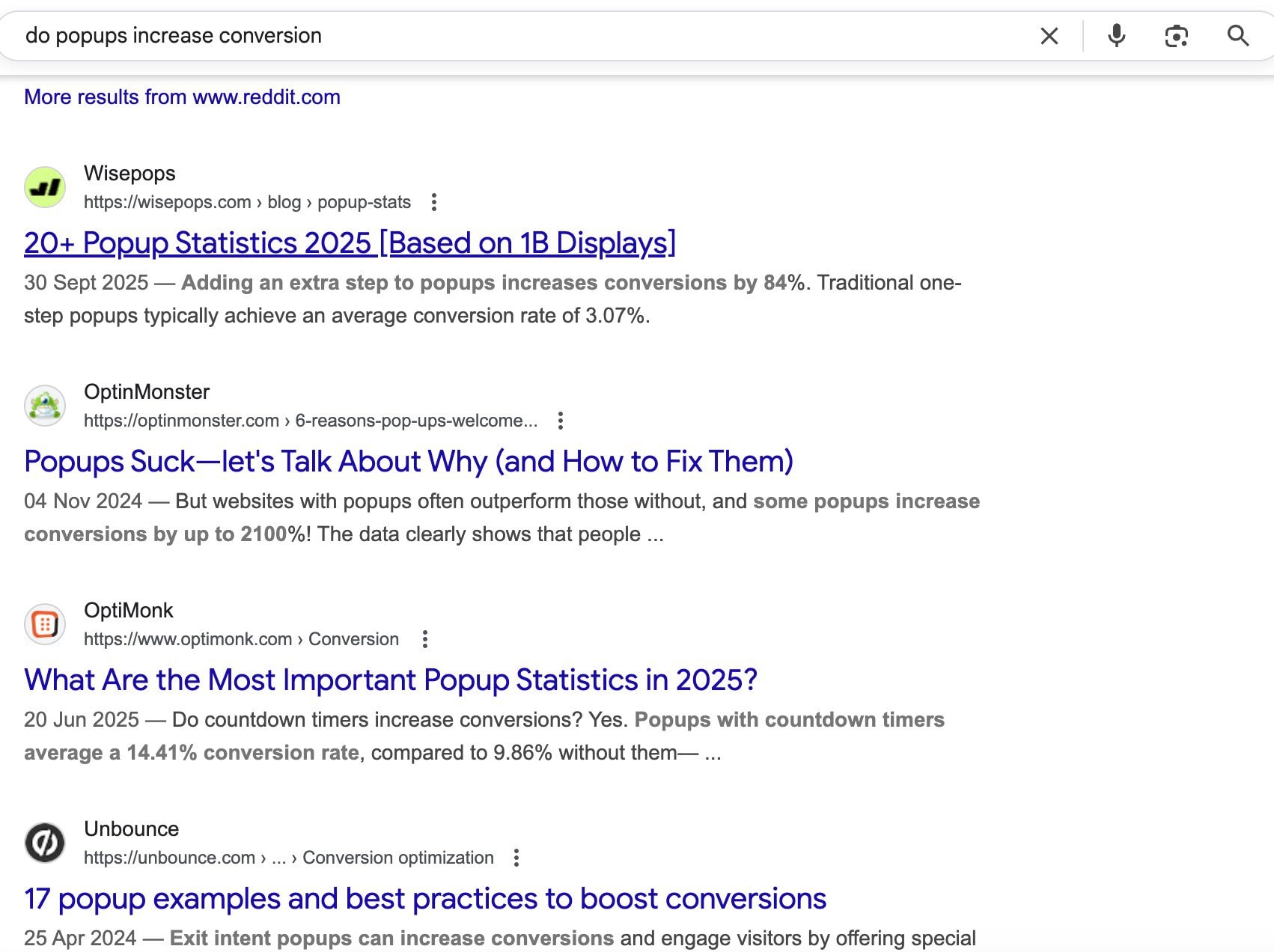
The same can be said for agencies running email marketing. They can point to the number of subscribers added to a welcome flow or short-term sales attributed to the discount, but that metric is misleading. In many cases, the person converting would have purchased anyway; the pop-up didn’t create incremental revenue, it just shifted the perception of value and gave the agency a nice conversion metric to report.
Make Smart Decisions Without Overthinking It
Design for people, not metrics. We could spend months on A/B tests. We’d check click-through rates and fine-tune every tiny detail or as Erika Hall says, we can either chase every bit of data or take a “just enough research” approach, gathering enough insight to make an informed decision efficiently. 10% pop-ups may work in rare cases, but for most small businesses, they won’t have the resources to prove it, and the risk usually outweighs the reward.